
Two One-of-a-Kind Books Make a Difference
The 147-page hardback “The Dreamy Side” by Ruben Molina is difficult to categorize. A sizzling through-line of pachuco culture via a history of “oldies” records, 78s and 45s, in Los Angeles’ music scene and four disc jockeys favored by young Chicano listeners, who identified their neighborhoods through record titles. With news and record trade clippings, it’s also a display of “outsider” art: over 50 photos of examples of neighborhood and regional handwritten gang “placas” on these mainly 45s and record sleeves with designs and names that represent who they were and who they are. To be clear, the author uses the term “gang” only once in the text and “graffiti” nowhere in the text.
To my knowledge, no other published work has portrayed such “placas” in this context, representing both the records and their symbolic status with given neighborhoods. Also noted are the music and the era these mainly young people identified with from the very early 1950s: “Pachuko Hop” by Chuck Higgins; the mid-50s, “Florence” by the Paragons, adopted by Florencia, to the 1970s and “Eighteen with a Bullet” by Pete Wingfield, favored by 18th Street.
These exemplars are published for the first time (apart from gang detective workbooks who have used them to identify membership). Combining a history, examples of that history and portrayals of how the community received this music is used to describe how “lowrider” music impacted record buyers.
A featured aspect are two sheets kept by Rhythm-Aires record collective of 78s brought to parties given by a female R&B fan in 1953 to 1957, with a “roll call” sheet signed by various attendees and the story of her contributions, previously known to only few insiders representing the importance of these weighty recordings to the community.
The title, “The Dreamy Side” is taken from the ballad side of the first of dozens of “Oldies But Goodies” albums marketed by DJ and label owner Art Laboe, who is taken to task for watering down the on-air sound over several decades. Johnny Otis, who broadcast on Long Beach AM KFOX, KWKW DJ Huggy Boy, who lived in Long Beach and Hunter Hancock of KGFJ in the 60s are DJs profiled in this work. Each of these four DJs also released 45s on their own labels, and several of these labels are pictured in the photo section, examples: Little Julian Herrera’s “Lonely, Lonely Nights” on Otis’ Dig label and Big Jay McNeely’s “There Is Something On Your Mind” on Hancock’s Swingin’ – both classics to the genre.
Among the gallery of labels are several representing harbor area neighborhoods, making some of the visuals local to Long Beach. To order: Ruben Molina, P.O. Box 6074, La Puente, CA 91747 or for more details, see his page on Facebook.
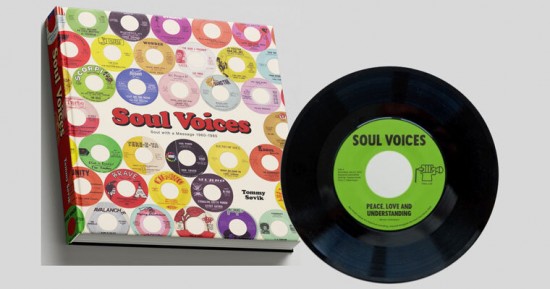
The 249-page book, “Soul Voices” by Tommy Søvik has a clear thesis: soul music records that reflect racial discord, anti-war attitudes, protests and the general state of race relations in the U.S. during the 1960 and 1970s. And what powerful examples the author comes up with. Many such as “He’ll Be Back” by the Players and “No Man Is An Island” by the Van Dykes were hits and were familiar to me. Others, not so much.
This coffee table-sized tome represents how the world sees the U.S. Tommy Søvik, a Norway-based author presents an unblinking description of how Black Americans viewed their own circumstances (and how some in other cultures and traditions viewed the same circumstances) through recorded performance, beginning with the very rare 45, “The Freedom Riders” by Harold Jackson in 1959. From then on, it’s a trip through the sizzling 60s and the sobering 70s, record-by-record, label by label, artist by artist.
The book is divided into three sections: “The Awakening” (1960 to 1968), “Soul On Fire” (1968 to 1976) and “Velvet Soul” (1976 to 1980) with subchapters: “Marching Off To War” “Soul Power” “Vietnam” “Drugs Ain’t Cool” and “Slums of the City” with records representing each of these subjects, and many more including real estate redlining and opinions about the moon landing.
Examples abound. For instance, a little-known connection between the Duke label’s Black owner Don Robey and presidential candidate Richard Nixon involving the Greer Brothers title, “We Don’t Dig No Busing” in 1972. Seems that Robey was in the Nixon camp on this issue, made sure printed lyrics accompanied the disc in the Houston market and even mailed a copy of the 45 to Nixon.
Songs about women’s rights are most identified with Aretha Franklin’s “Respect” in 1966. But just as powerful was the little-known Pam Kellum, who recorded the sought-after direct hit title, “What You See You Can’t Get” about her personal space for the Long Beach-based A&B label in 1971.
Few equate Motown as the label with controversy, witness Berry Gordy’s Jr.’s hesitation of release Marvin Gaye’s “What’s Going On.” He knew Martha & the Vandellas wouldn’t hit with “I Should Be Proud”, rather they sang about how loss of life in war affects their loved ones. This Gordy label release was followed by several Edwin Starr Vietnam protests, most notably his anthem, “War (What Is It Good For)” and “Stop the War Now,” a surprising stand from the usually non-controversial Motown family of labels.
Of course, Stevie Wonder paved his own path, but Diana Ross & the Supremes? “Soul Voices” gives a new backstory to how their “Love Child” was born, namely, Berry Gordy Jr’s acceptance of the concept as long as it had a happy ending, though a happy ending is far from the objective of this tome. Included with the book is a 45 of a previously unissued soul vocal group.
To order: contact Tommy Søvik at tommy.soul@gmail.com.
Get it while you can. With these books, though the price might seem elevated, know these are small self-published works that are rarely offered on the secondary market. The earlier self-published book by Molina sold out at a modest price. Now, the only used copy available of this sought-after book sells for around $250 on Amazon.
Category:
- Log in to post comments
Featured Video

Beachcomber
Copyright 2026 Beeler & Associates.
All rights reserved. Contents may not be reproduced or transmitted – by any means – without publisher's written permission.

